

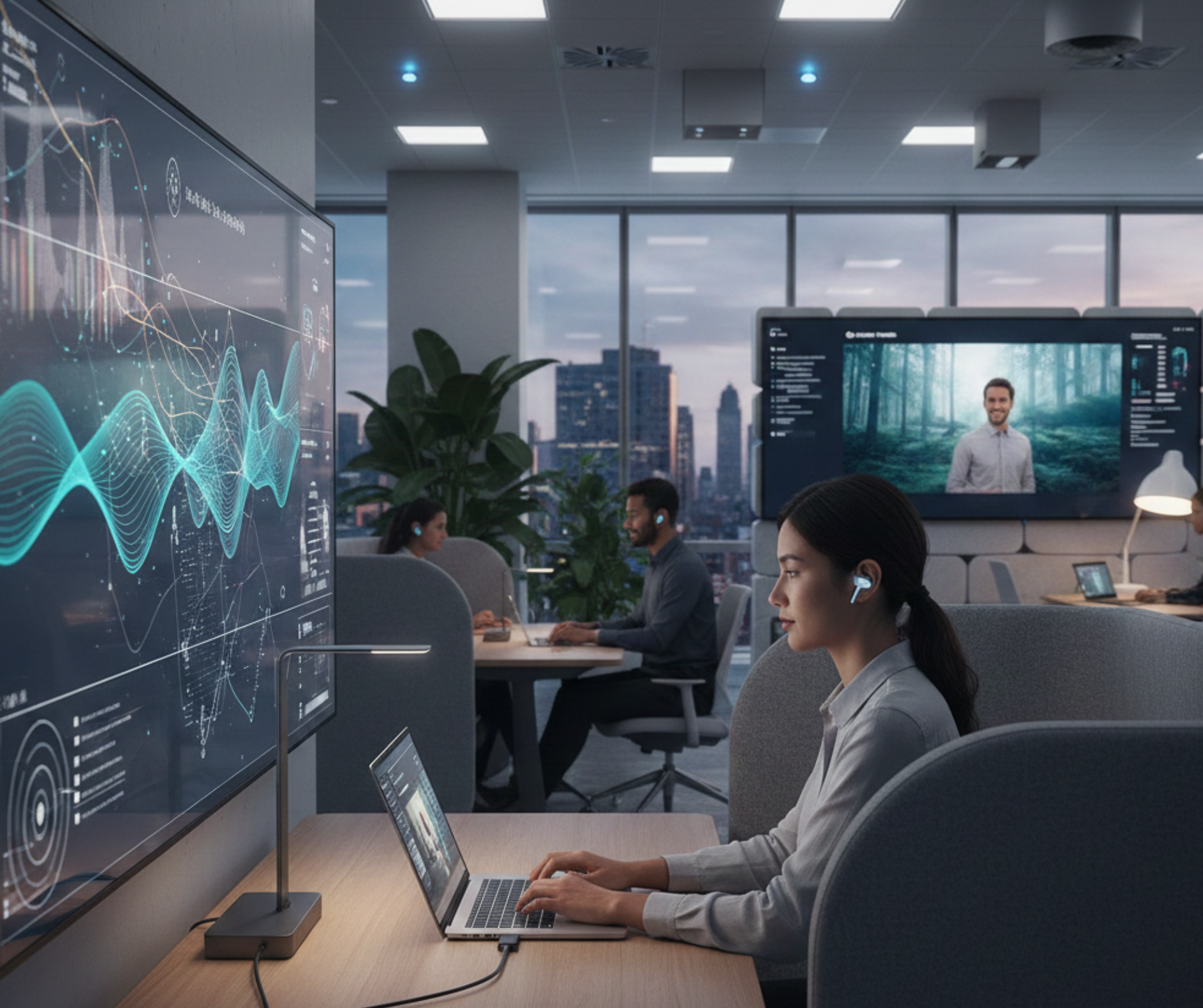
We all know the macro trends reshaping the workplace: hybrid flexibility, the rise of Unified Communications and Collaboration (UCC) platforms, and the necessary adoption of AI. These are highly visible.
But what about the quiet, foundational shifts happening right now—the trends that are just gaining traction and will define your office’s success in the next three to five years?
At elbglobal.com, we see three powerful, yet often unrecognized, movements in technology and design that are strategically separating leading organizations from the rest.
1. Beyond Occupancy: The Rise of Predictive, Personalized Workspaces
For years, “smart building” meant using sensors to track room occupancy and turn off lights. That’s old news. The emerging trend is data-driven hyper-personalization.
This isn’t about knowing if a desk is used, but how it’s used, by whom, and why.
Modern AV and IoT sensors (monitoring everything from noise levels to CO2) are feeding data into sophisticated analytics engines. This data allows companies to move past simple hot-desking to design tailored workplace neighborhoods.
- What’s Emerging: AI and agentic systems that use real-time data to autonomously adjust lighting, temperature, and even air quality to a specific person’s profile the moment they badge into a zone.
- The Unrecognized Impact: The office transforms from a generic space to a dynamic, adaptive environment that anticipates individual needs, driving a higher rate of voluntary office attendance because the physical space is superior to the home office.
2. The Invisible Integration Stack: USB-C and Auracast
Technology is at its best when it disappears, leaving behind only the intuitive experience. The next wave of innovation is focused on achieving seamless, invisible connectivity.
The USB-C Revolution
The shift is more than just a single port; it’s a massive simplification of the entire meeting room stack. USB-C is becoming the universal connection for power, video, data, and charging. The subtle integration trend is minimizing the equipment needed in a room—removing bulky cables, reducing reliance on switchers, and making the act of walking into a room and connecting nearly instant.
The Auracast Audio Standard
On the audio side, look out for Bluetooth Auracast. This emerging standard allows one audio source (like a video wall or a TV in a large town hall) to broadcast to an unlimited number of receivers (personal headphones, hearing aids) simultaneously.
- The Unrecognized Impact: This solves the pervasive problem of large-area acoustics and accessibility. Employees can customize their hearing experience, tune into a specific language feed, or eliminate distraction in noisy, open-plan settings—all without needing specialized, proprietary AV systems.
3. Designing for Neurodiversity and Deep Focus
Biophilic design (bringing nature indoors) and wellness zones are established trends. The evolution gaining speed is the focus on neurodiversity and intentional sensory design to support different cognitive needs, particularly deep focus.
This goes beyond adding a few plants:
- Acoustic Zoning: Deploying sophisticated sound masking and acoustic elements to create distinct “sonic bubbles.” Data on usage and noise complaints is driving the design of highly protected “deep work” rooms or pods with materials chosen to absorb specific frequencies.
- Kinetic and Modular Architecture: Offices are integrating kinetic video walls and modular construction where displays are built from easily replaceable, standardized components. This sustainability effort also ensures a dynamic, reconfigurable space that can shift quickly from a large gathering space to multiple private zones—a necessity for employees who thrive on change versus those who require consistency.
- Immersive Zones (Beyond the Photo Op): Creating spaces designed to intentionally engage all senses, moving away from purely “Instagrammable” aesthetics to spaces that genuinely support focus, concentration, or creative flow through subtle control over scent, lighting color temperature, and texture.
Ready to Future-Proof Your Workplace?
These emerging trends are subtle but deeply strategic. They represent an opportunity to transform your real estate into a high-performing asset that attracts talent and maximizes productivity. Don’t wait until these shifts become the industry standard.
We specialize in translating these complex technological advancements into integrated design strategies that work for your business.
Contact us today for a free consultation to assess how these emerging trends can be leveraged in your office environment.